If you’ve ever found yourself daydreaming of a tropical getaway, Mango Sticky Rice: The Ultimate Guide to Thailand’s Sweet Treat Recipe will instantly transport you to the bustling food stalls of Bangkok and serene Thai beaches. This beloved dessert perfectly balances the rich creaminess of coconut-infused sticky rice with the bright, juicy sweetness of ripe mangoes, creating a harmonious dance of flavors and textures that’s both comforting and exotic. Whether you crave something refreshing on a warm day or want to impress friends with a truly authentic treat, this recipe captures the heart of Thai cuisine in a bowl.
Ingredients You’ll Need
Every ingredient in Mango Sticky Rice: The Ultimate Guide to Thailand’s Sweet Treat Recipe is simple yet crucial, bringing its own unique dimension to this iconic dish. From the sticky rice that forms the luscious base, to the creamy coconut milk that infuses it with richness, each element is essential for creating that perfect balance of taste and texture.
- Glutinous rice (sweet rice): The star of the dish, its sticky texture is what sets this dessert apart from regular rice varieties.
- Water for soaking: Essential for softening the rice so it steams to perfection without becoming mushy.
- Full-fat coconut milk: Divided into two portions, it delivers the rich, creamy flavor that is signature to the recipe.
- Salt: Just a pinch enhances the sweetness and balances the coconut’s richness.
- Granulated sugar: Sprinkled into the coconut milk mixtures, it makes the dessert delightfully sweet without overpowering.
- Cornstarch: Mixed with water to create a slurry that thickens the luscious mango sauce.
- Ripe mangoes: The bright, juicy slices bring freshness and natural sweetness, rounding out the dish beautifully.
- Toasted sesame seeds (optional): For a subtle nutty crunch and added visual appeal.
How to Make Mango Sticky Rice: The Ultimate Guide to Thailand’s Sweet Treat Recipe
Step 1: Soak and Prepare the Rice
Start by placing the glutinous rice in a large bowl and covering it with cold water. Soak for at least 4 hours or overnight in the fridge so the grains soften up nicely. This step ensures the rice will steam evenly, getting that signature tender and chewy texture that makes Mango Sticky Rice so irresistible.
Step 2: Drain, Rinse, and Steam
After soaking, drain the rice in a sieve and rinse under cold tap water until the water runs clear—this removes excess starch that could make the rice gummy. Next, line your steamer basket with cheesecloth or parchment paper and spread the rice evenly. Steam over boiling water for about 20-25 minutes, checking to make sure the water doesn’t run dry. The rice should look translucent and feel soft but with a slight chew—perfect!
Step 3: Make the Coconut Milk Mixture and Infuse the Rice
While the rice cooks, combine the larger portion of coconut milk with salt and sugar in a saucepan, stirring until dissolved. Warm it gently without boiling to extract maximum flavor. Once the rice is cooked, transfer it to a bowl and pour the warm coconut milk over it. Fold gently to coat every grain, then cover and let it rest for 30 minutes to an hour. This resting period lets the rice soak up all the creamy goodness, making every bite luxuriously flavorful.
Step 4: Prepare the Mango Sauce
In a small saucepan, mix the remaining coconut milk with salt and sugar, heating it to a gentle simmer. Whisk in the cornstarch slurry carefully and continue simmering until the sauce thickens slightly. This silky sauce drizzles over the mango and rice, elevating the dish with a rich, velvety finish that’s pure magic on your palate.
Step 5: Slice the Mangoes and Assemble
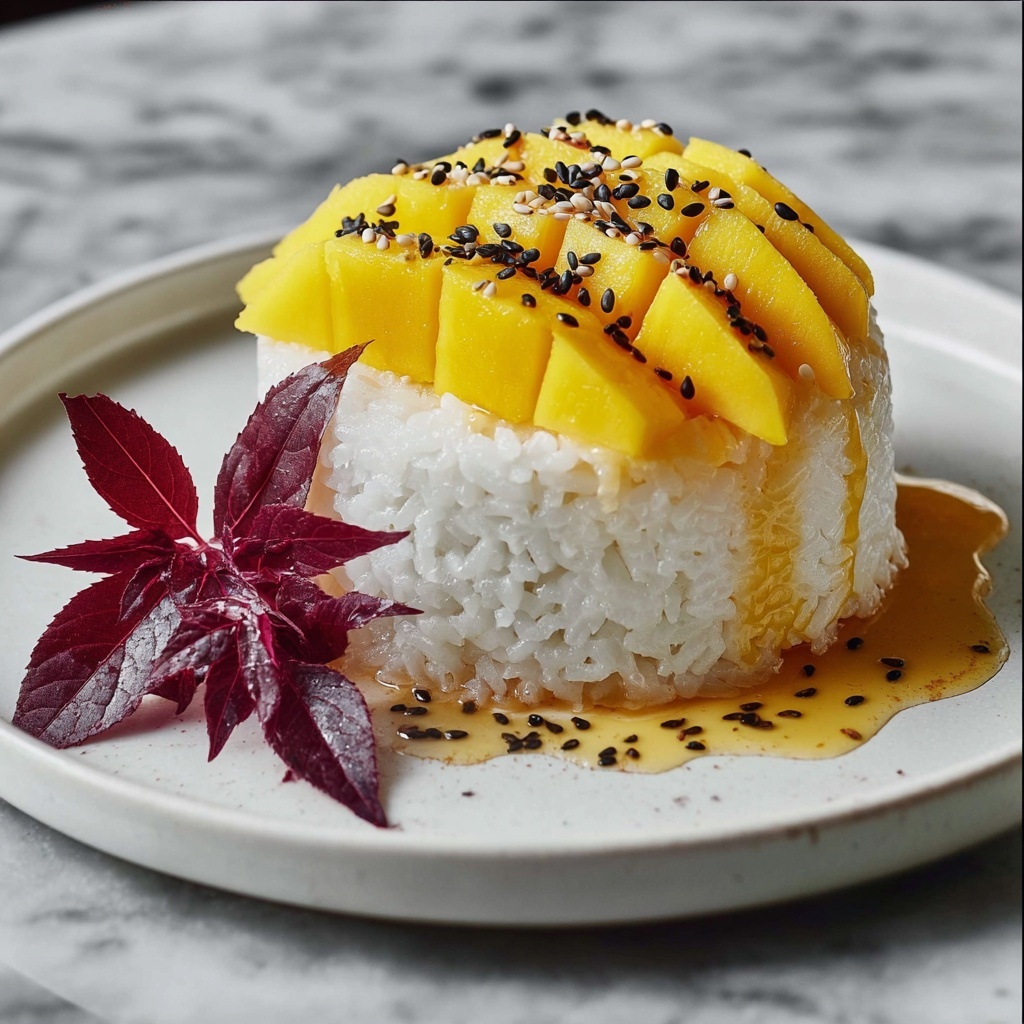
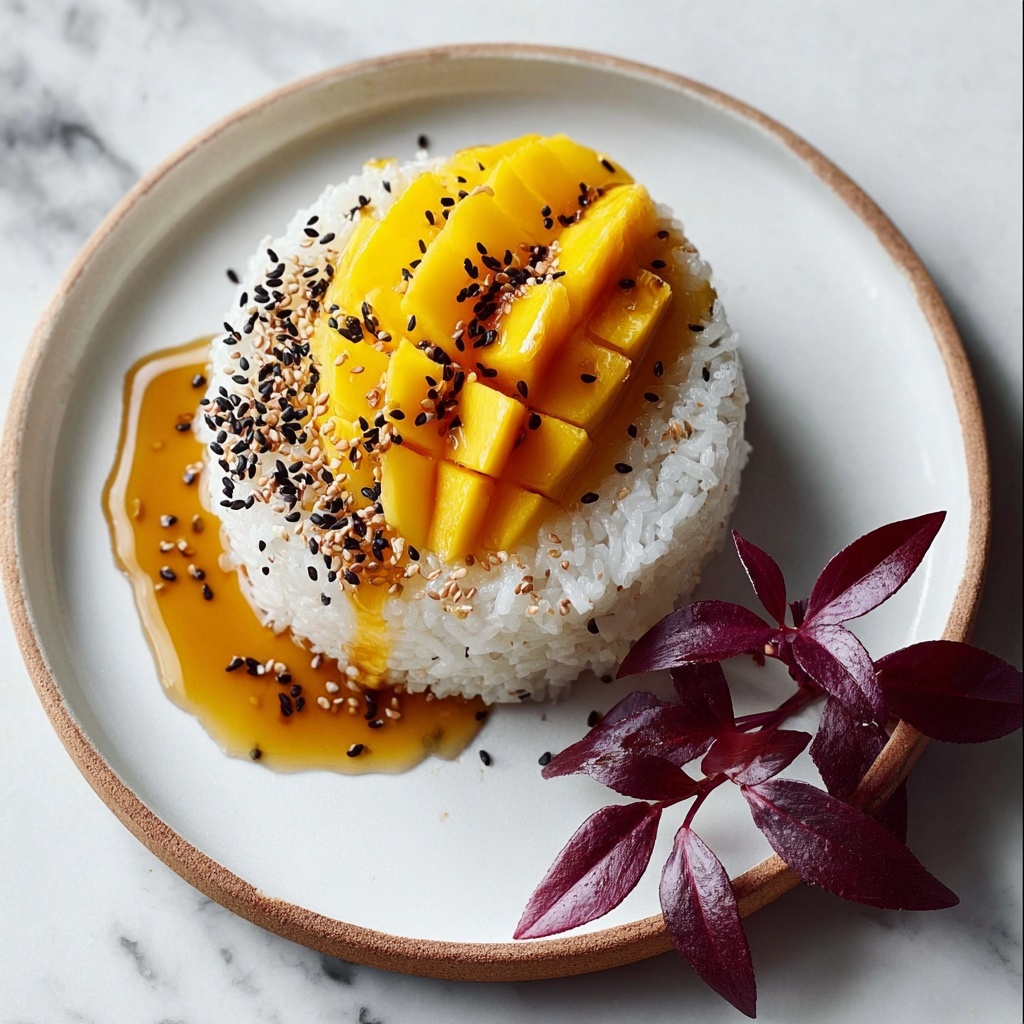
Peel your ripe mangoes and slice them into neat, thin pieces—these juicy slices provide a refreshing contrast to the creamy stickiness of the rice. Plate a generous mound of sticky rice, arrange mango slices beside it, and pour your warm mango sauce over the top. For an optional, delightful crunch, sprinkle toasted sesame seeds. Serve immediately and prepare yourself for happy smiles all around.
How to Serve Mango Sticky Rice: The Ultimate Guide to Thailand’s Sweet Treat Recipe
Garnishes
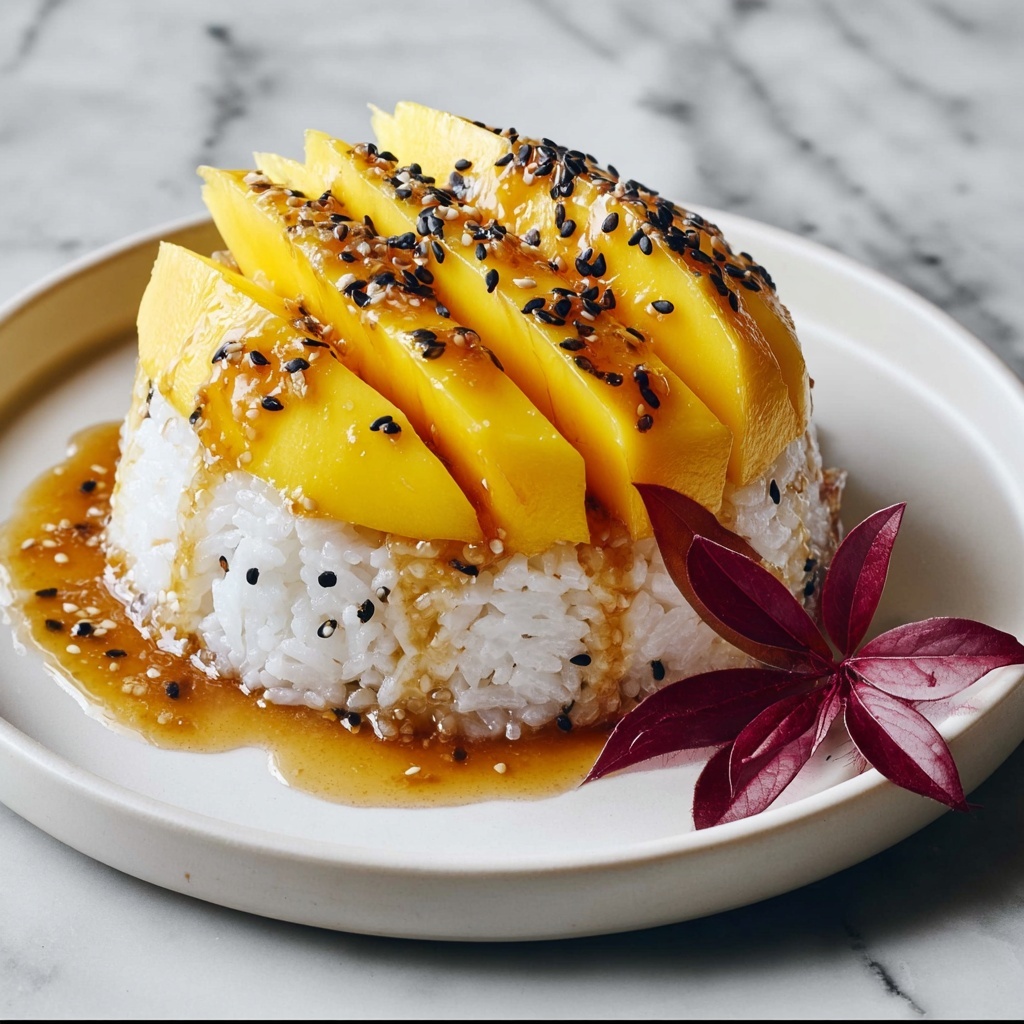
A simple sprinkle of toasted sesame seeds adds a wonderful nutty aroma and subtle crunch to balance the other soft textures. If you want to up the visual appeal, a sprig of fresh mint brings a vibrant pop of green and a fresh scent that pairs beautifully with the tropical flavors.
Side Dishes
Although Mango Sticky Rice shines perfectly on its own, you can pair it with other light treats like coconut ice cream or Thai tea for a full-on Thai dessert experience. Fresh tropical fruits such as papaya or pineapple also complement this dessert well, keeping the meal light and refreshing.
Creative Ways to Present
Try serving your Mango Sticky Rice in mini glass jars for a charming presentation, perfect for parties or gifting. You could also mold the sticky rice into small shapes using silicone molds or cups before plating, then drape mango slices artistically around it for that wow factor everyone loves.
Make Ahead and Storage
Storing Leftovers
Mango Sticky Rice is best enjoyed fresh but can be stored in an airtight container in the refrigerator for up to 2 days. Keep the mangoes separate from the rice and sauce if possible to maintain the best texture and flavor.
Freezing
Because sticky rice’s texture changes when frozen, it’s not recommended to freeze Mango Sticky Rice if you want to keep that ideal chewiness. The mangoes themselves don’t freeze well either, so this dessert is really meant for fresh enjoyment.
Reheating
To revive leftover sticky rice, gently steam it or microwave it covered with a damp paper towel to add moisture back in. Warm the coconut sauce separately and bring the mango slices to room temperature before serving for the best flavor experience.
FAQs
Can I use regular rice instead of glutinous rice?
Regular rice won’t replicate the unique sticky and chewy texture that glutinous rice provides, so for an authentic Mango Sticky Rice experience, it’s best to stick with sticky rice varieties.
How do I know when the sticky rice is cooked perfectly?
The rice is done when it turns translucent and is tender yet slightly chewy without any crunch. Taste testing during steaming is key to preventing undercooked or overcooked rice.
What type of mangoes should I use?
Look for ripe, fragrant mangoes such as Ataulfo or Nam Dok Mai—their sweetness and creamy texture complement the dish wonderfully. Avoid underripe mangoes as they will be too firm and tart.
Can I make this dessert vegan?
This recipe already uses coconut milk instead of dairy, making it naturally vegan. Just ensure the sugar you use is vegan-friendly if that’s a concern for you.
Is there a substitute for cornstarch in the mango sauce?
You can use tapioca starch or arrowroot powder as a thickening agent if you don’t have cornstarch on hand. Just mix them with cold water first to create a slurry and use in the same way.
Final Thoughts
There’s something truly special about Mango Sticky Rice: The Ultimate Guide to Thailand’s Sweet Treat Recipe that turns a handful of simple ingredients into an unforgettable celebration of flavor and comfort. It’s a dessert that invites you to slow down, savor the creamy coconut-infused rice, and enjoy the bright sweetness of perfectly ripe mangoes. I can’t wait for you to make it your own—and trust me, once you try it, it’ll quickly become a favorite in your kitchen too!
Print
Mango Sticky Rice: The Ultimate Guide to Thailand’s Sweet Treat Recipe
- Prep Time: 15 minutes (plus 4+ hours soaking time)
- Cook Time: 30 minutes
- Total Time: 4 hours 45 minutes (including soaking and resting)
- Yield: 6 servings
- Category: Dessert
- Method: Steaming
- Cuisine: Thai
- Diet: Gluten Free
Description
Mango Sticky Rice is a beloved traditional Thai dessert featuring sweet, creamy coconut-infused glutinous rice paired with fresh ripe mango slices and a luscious mango sauce. This recipe guides you through soaking and steaming the sticky rice to perfection, making the rich coconut milk mixture, and preparing a smooth mango sauce thickened with cornstarch. Garnished with optional toasted sesame seeds, this sweet treat is a delightful balance of textures and flavors, perfect for a refreshing and comforting dessert.
Ingredients
Sticky Rice
- 1 ½ cups glutinous rice (sweet rice), also known as sticky rice
- 1 ½ cups water (for soaking)
Coconut Milk Mixture for Rice
- 1 can (13.5 oz) full-fat coconut milk
- ½ teaspoon salt
- 2 tablespoons granulated sugar
Mango Sauce
- ½ can (6.75 oz) full-fat coconut milk
- ¼ teaspoon salt
- 1 tablespoon granulated sugar
- 1 teaspoon cornstarch mixed with 1 tablespoon cold water (slurry)
Other Ingredients
- 2 ripe mangoes, peeled and sliced
- Toasted sesame seeds (optional for garnish)
Instructions
- Soak the Rice: Place the glutinous rice in a large bowl and add 1 ½ cups of water to cover it. Allow the rice to soak for at least 4 hours, preferably overnight in the refrigerator, to soften the grains.
- Drain the Rice: After soaking, drain the rice thoroughly using a fine-mesh sieve. Rinse under cold running water until the water runs clear to remove excess starch.
- Steam the Rice: Line a steamer basket with cheesecloth or parchment paper for easy removal. Spread the drained rice evenly over the basket.
- Steaming Time: Fill the bottom of the steamer with water below the basket level. Bring water to a boil over medium-high heat. Place the basket on the steamer and cover tightly. Steam the rice for 20-25 minutes, checking periodically to ensure the water does not evaporate. The rice should turn translucent and tender.
- Checking for Doneness: Taste a small portion of the rice; it should be soft and slightly chewy, without crunch. If not fully cooked, steam an additional 5-10 minutes, checking regularly.
- Combine Coconut Milk Ingredients: While the rice steams, combine the full can (13.5 oz) of coconut milk, ½ teaspoon salt, and 2 tablespoons sugar in a medium saucepan. Stir well to dissolve.
- Heat the Mixture: Warm the coconut milk mixture over medium heat, bringing it to a gentle simmer while stirring occasionally to prevent burning. Avoid boiling.
- Infuse the Rice: Transfer the cooked sticky rice to a large bowl. Pour the warm coconut milk mixture over the rice and gently fold to coat all grains evenly without mashing.
- Resting Time: Cover the bowl with plastic wrap or a towel and let the rice rest for 30 minutes to 1 hour, allowing it to absorb the coconut milk fully.
- Combine Mango Sauce Ingredients: In a small saucepan, mix the remaining half can (6.75 oz) coconut milk, ¼ teaspoon salt, and 1 tablespoon sugar. Stir to dissolve.
- Create the Cornstarch Slurry: In a small bowl, whisk together the cornstarch and 1 tablespoon cold water until smooth to prepare the thickening slurry.
- Heating and Thickening: Bring the coconut milk mixture to a gentle simmer over medium heat. Slowly whisk in the cornstarch slurry, stirring constantly to prevent lumps.
- Simmering the Sauce: Continue simmering for 1-2 minutes until the sauce thickens enough to coat the back of a spoon. Remove from heat and set aside.
- Prepare the Mangoes: Peel the ripe mangoes and slice the flesh into thin, even slices.
- Plating: Spoon a generous portion of the coconut-infused sticky rice onto a serving plate. Arrange mango slices beside or atop the rice. Drizzle the warm mango sauce over the dish.
- Garnishing (Optional): Sprinkle toasted sesame seeds on top for added flavor and texture. Optionally, add a sprig of mint for color.
- Enjoy: Serve immediately and savor your delicious homemade Mango Sticky Rice dessert.
Notes
- Use glutinous (sticky) rice specifically for authentic texture; regular rice won’t provide the same chewiness.
- Soaking the rice overnight improves softness and steaming results.
- Be careful not to boil the coconut milk mixtures to prevent separation.
- The cornstarch slurry is essential for thickening the mango sauce without lumps.
- To toast sesame seeds, dry roast them in a skillet over medium heat until golden and fragrant.
- This dessert is best eaten fresh but can be stored in the refrigerator for up to 1 day.
- Rewarm sticky rice gently before serving if stored refrigerated.